


The Story of the Great Himalayan National Park Conservation Area
The Western Himalayas - A Natural Bridge Between Worlds
A Conservation Journey Begins
The Siwalik sediments, 1969
In the spring of 1969, Tony Gaston arrived in the Himalayan foothills of Himachal Pradesh to search for fossils in the Siwalik sediments. The Chil Pine ridges, the calls of Jungle Fowl and Peacocks, and the distant Himalayan peaks sparked a lifelong fascination. Later that year, at Manali—then a quiet mountain hamlet—he first experienced the raw beauty of the Himalayas.

Gaston and Anne Marie Gaston

Left to Right Tony Gaston, Ashish Kothari and Pratibha Pandey during IIPA days
Inspirations and Early Explorations
Through the 1970s, Tony and Anne-Marie explored Himachal’s landscapes, meeting hill communities and encountering vibrant mountain cultures. A decisive influence came through Penelope Chetwode and her book Kullu: The End of the Habitable World, deepening their connection to the region. Their treks revealed extraordinary forests and wildlife, especially in the Tirthan and Sainj valleys.
Scientific Foundations for Protection
Recognizing the Need
A 1972 trek across the Bashleo Pass revealed to Gaston the stark difference between degraded areas near Manali and intact conifer–oak–horse chestnut forests alive with birds. This realization sowed the seeds for modern Western Himalayan conservation.

Bashleo-Pass

Himachal Wildlife Project Three, Tirthan
The Himachal Wildlife Project
In the late 1970s, Gaston—along with Peter Garson and Mac Hunter—launched the Himachal Wildlife Project. Supported by WWF-India, World Pheasant Association, Zoological Survey of India and the Himachal Pradesh Forest Department, it became one of India’s pioneering scientific wildlife surveys. They selected Himachal Pradesh as their study area because it was among India’s most heavily forested states, with around 40% forest cover, and even higher percentages when high-altitude barren areas were excluded. The region also contained extensive moist temperate forests—habitats particularly rich in wildlife and relatively less disturbed by human activity at the time. The team named their initiative the “Himachal Wildlife Project.”

1979-80 wildlife survey sites of Himachal Wildlife Project

Balak Ram loaded; a porter with sharp eyes for wildlife sightings
Key findings (1979–1980)
These findings laid the groundwork for declaring a National Park.
Intact wildlife in remote Sainj & Tirthan valleys.
Heavy grazing pressures in Solang and Hamta.
Jiwanal–Sainj–Tirthan identified as prime conservation zones.
Creation of the National Park
A Protected Landscape Emerges
In 1984, based on scientific recommendations, the Government of Himachal Pradesh declared a National Park covering the Sainj, Jiwanal, and Tirthan catchments. Great Himalayan National Park was officially established in 1999, protecting one of the last remaining intact Western Himalayan ecosystems.

Ecodevelopment Zone or Ecozone
A Model for Science-Based Conservation
Unlike many protected areas in India, GHNP was created not from royal hunting preserves but from ecological research and vision. Its valleys—remote and sparsely populated—remained largely untouched by the development boom of the Kullu Valley.
Leadership, People & Partnerships
A New Era of Engagement
From 1998 to 2006, Sanjeeva Pandey led GHNP as its Director. Guided by Vipassana discipline and collaborative values, he focused on:
— Linking conservation with local livelihoods
— Reforming resource governance
— Involving women and marginalized groups
— Building partnerships across government, NGOs, and communities

For Biodiversity Conservation, involve community

Workshop to plan monitoring programme at Sai Ropa, GHNP, May 1998
Research & Learning
Pandey’s doctoral work with G.S. Rawat and Sejal Worah strengthened GHNP’s evidence-based management and highlighted the importance of socially inclusive conservation.
Encounters that Shaped the Park
A pivotal meeting in 2000 with Payson R. Stevens led to creative and scientific collaborations—treks, storytelling, and GHNP’s first website.
Other key allies:
-
Vinay Tandon — Strategic insights on linking Women’s Groups and conservation.
-
Avay Shukla — Support for creating Khirganga National Park to safeguard alpine habitats.
Family, friends, and colleagues joined treks across GHNP, deepening bonds between people and place.
%20and%20Arny%20at%20Dhel%20ridge%2C%20Oct%202000.jpg)
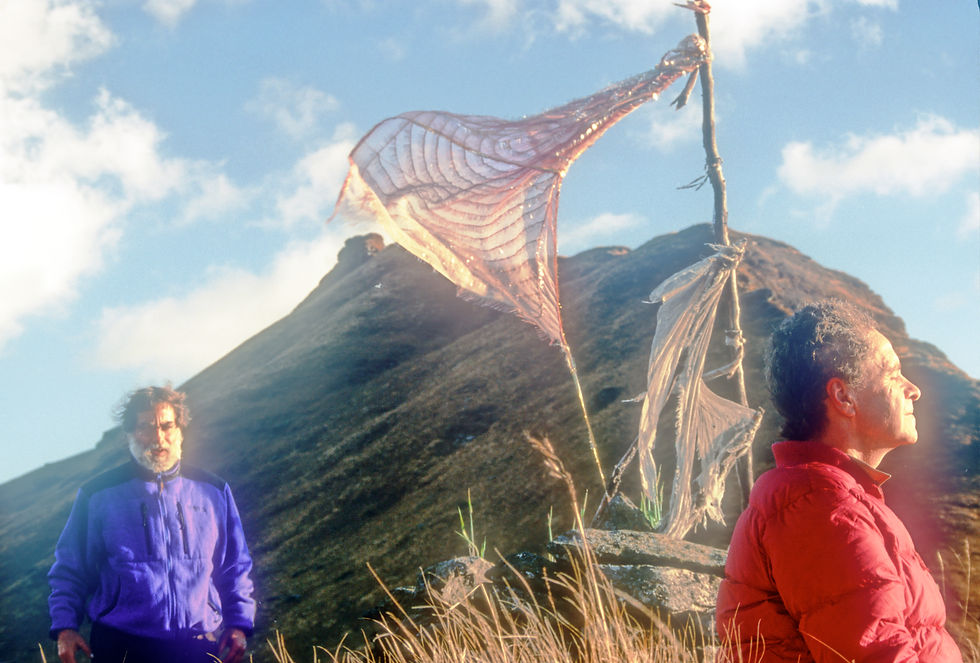
Friends of GHNP Payson (R) and Arny at Dhel ridge, Oct 2000
Friends of GHNPCA
Friends of GHNPCA was formed in 2000 as a volunteer group. Members come from all walks of life (mostly the foreign visitors/tourists who have visited the GHNPCA) and believes that GHNPCA should have international support for its efforts to protect a part of the unique environment of the Western Himalaya. These dedicated members helped further spread the message of the Park to the world. The Web site www.greathimalayannationalpark.com had been created and developed by the Friends of GHNPCA. A 20-minute video documentary, Voices and Choices in the Great Himalayan National Park, has been made by the Friends (2005). The video A Few Impressions of GHNP has interviews with people closely associated with GHNPCA (2010). Friends of GHNPCA also prepared most of the educational and promotional print work for the Park including brochures, posters, flyers, etc. There have been a number of slide shows and talks on GHNP in USA and Europe. All these efforts have given the Park world wide publicity.
_JPG.jpg)
Payson and Pandey at Dhel meadow 3737m

Right: Jeff Salz at Yeshe peak (Tirthan Valley)
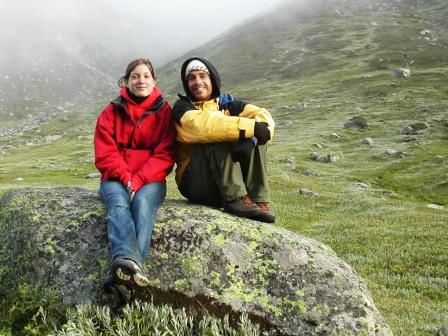
Denial and Amilie from France volunteered to make Documentary Film (2005)
World Heritage Recognition: UNESCO World Heritage Site
The UNESCO World Heritage nomination was coordinated by Friends of GHNP, including Pandey and Stevens, with support from experts worldwide.
Conservation Area:
-
754.4 sq km GHNP
-
90 sq km Sainj Wildlife Sanctuary
-
61 sq km Tirthan Wildlife Sanctuary
-
265.6 sq km Ecozone (buffer)
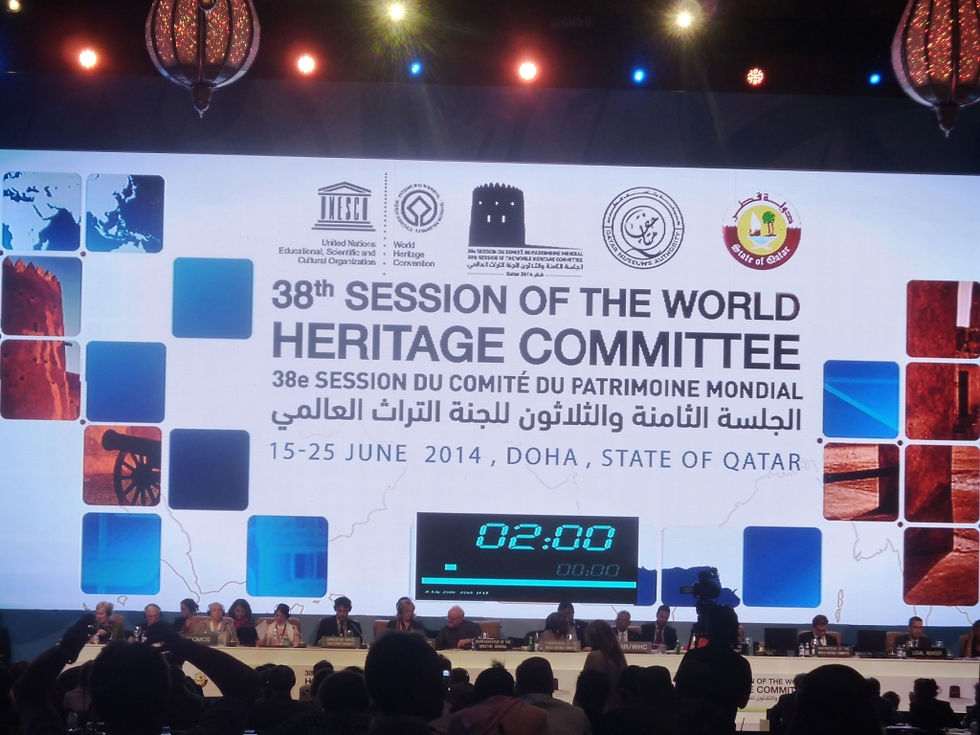
23 June 2014: GHNP was inscribed as a UNESCO World Heritage Site under Criterion X (Outstanding Universal Value for biodiversity).
FoGHNPCA and IRALE
The website www.greathimalayannationalpark.com had been receiving lots of tractions and being managed by FoGHNPCA, involving technical inputs, management time and financial implications, which also needs to be transcended. Many of the members of FoGHNPCA have emphasized the urgent need to explore the options to formalize and strengthen these efforts in GHNPCA. Since the FoGHNPCA is only an informal group and involves foreign nationals too, it is not possible to bring in a formal structure within India law. Hence, any existing system that can host the functioning of FoGHNPCA and other agenda related to Himalayan Ecosystem may be the step forward. Accordingly, the discussion with Indian Regional Association for Landscape Ecology (IRALE), a Trust registered in Dehradun, is underway to accommodate this interest and accordingly, it can host the functioning of the FoGHNPCA, which can take the shape of ‘FoGHNPCA for Conservation and Communities (FGCC)’, ensuring a well-defined and collaborative approach under a dedicated framework and an Memorandum of Understanding (MoU). This will help drive impactful action, advance scientific research, technical assistance to the Park management, and enhance long-term ecological resilience in the region. To achieve this, a set of strategic actions has been planned, focusing on immediate, medium-term, and long-term goals for the sustained conservation of GHNPCA.
Planned Strategic Actions and Next Steps
This FoGHNPCA-IRALE partnership will focus on:
— Expanding GHNPCA to better protect biodiversity and migration corridors.
— Strengthening eco-tourism and conservation-based livelihoods through local partnerships.
— Continuing and expanding our website, www.greathimalayannationalpark.com, as an essential on-going historical source of information on the Park (since 2002) and an archive for science and community-related content on GHNP/GHNPCA
— Launching citizen science and education programs that engage youth and residents.
— Collaborating with community organizations to ensure local ownership and shared stewardship.
A Living Legacy
GHNPCA’s story is one of science, community, and enduring passion for the Himalayas. It reflects:
01
Visionary individuals inspired by nature
02
Scientific groundwork for modern conservation
03
Collaborative leadership integrating ecology with livelihoods
04
Global recognition of a unique mountain ecosystem
Today, GHNPCA stands as a model for landscape-level conservation, balancing protection, community well-being, and the timeless beauty of the Himalayas.

A panoramic view of Dhel meadow and adjoining woods